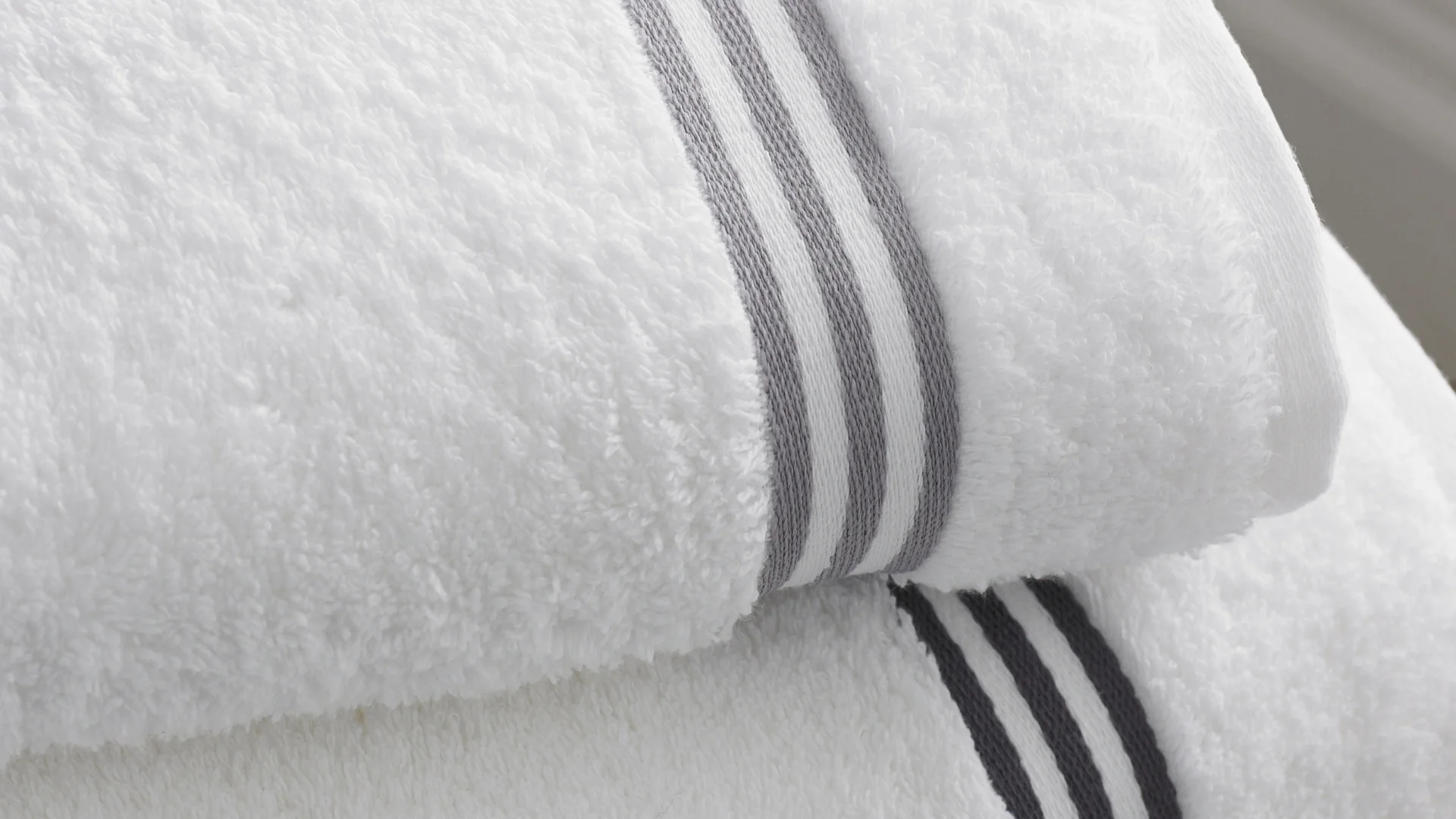
Choosing a highly absorbent towel depends on more than thickness alone. Fiber type, yarn quality, weave structure, GSM, finishing processes, and washing habits all influence how effectively a towel can absorb and retain moisture.
For anyone researching what is the most absorbent towel, cotton-based products are usually among the strongest options because their natural fibers can hold significant amounts of water while remaining soft and durable. The best choice can vary between bathrooms, kitchens, hotels, spas, and other professional environments because each use requires a different balance of absorbency, drying speed, weight, and durability.
What Makes a Towel Highly Absorbent?
A towel becomes highly absorbent when its fibers can quickly draw moisture away from the skin or another surface and hold that moisture within the fabric. Cotton performs particularly well because its natural structure attracts water, while terry loops increase the overall surface area available for absorption.
Several characteristics influence how effectively a towel absorbs water:
-
Fiber quality and cotton type
-
Yarn structure and twist level
-
Loop height and density
-
Fabric weight and GSM
-
Weave construction
-
Finishing processes applied during production
When evaluating what is the most absorbent bath towel, these characteristics should be considered together rather than focusing only on thickness. Well-constructed Turkish bath towels, for example, can combine strong moisture absorption with softness and balanced drying performance when suitable cotton and yarn structures are used.
Which Towel Material Is the Most Absorbent?
Cotton is generally one of the most effective materials for towel production because its natural fibers can absorb significant amounts of moisture while remaining comfortable against the skin. Different cotton varieties can provide different combinations of softness, durability, absorbency, and drying speed.
Common materials used for absorbent towels include:
-
Turkish cotton
-
Egyptian cotton
-
Pima cotton
-
Combed cotton
-
Cotton blends
-
Bamboo-derived viscose blends
-
Microfiber
People searching for what is the most absorbent towel often compare cotton with microfiber. Microfiber can absorb moisture quickly and dry rapidly, while cotton generally provides a fuller texture, better comfort, and the familiar feel expected from high-quality bath and hospitality textiles.
What Is the Most Absorbent Bath Towel?
For bath use, long-staple cotton towels with dense and well-formed terry loops are generally among the most absorbent choices. Turkish cotton, Egyptian cotton, and other premium cotton varieties can produce smooth and strong yarns that hold moisture effectively while maintaining a soft surface.
A highly absorbent bath towel usually combines:
-
High-quality cotton fibers
-
Consistent terry loops
-
Balanced yarn twist
-
Suitable GSM
-
Good air circulation through the fabric
-
Minimal coatings that interfere with water uptake
The answer to what is the most absorbent bath towel therefore depends on construction as much as material. A towel with excellent cotton but poor loop formation may perform worse than a slightly lighter product designed with more effective yarn and weaving specifications.
Absorbency should also be balanced with drying time. Extremely heavy towels may hold more water, but they can take considerably longer to dry, which may be less practical in humid bathrooms, hotels, spas, or facilities where towels are used and washed frequently.
What GSM Is Best for an Absorbent Bath Towel?
GSM, or grams per square meter, describes the weight of a textile over a defined area. It is useful for understanding towel density and weight, but it should not be treated as a direct measurement of absorbency because construction and fiber quality also affect performance.
Typical GSM ranges include:
-
300–400 GSM: Lightweight and quick-drying
-
400–600 GSM: Balanced absorbency and practical drying time
-
600–800 GSM: Dense, plush, and capable of holding more moisture
-
800+ GSM: Very heavy and luxurious, but slower to dry
For many users researching what is the most absorbent bath towel, a range of roughly 500–700 GSM offers a useful balance between moisture retention, comfort, and drying speed. The ideal specification still depends on the intended environment and how frequently the towel will be washed.
A high-GSM towel made from lower-quality cotton or tightly twisted yarn may not perform as well as a lighter product with better fibers and loop construction. GSM should therefore always be evaluated together with material, yarn structure, and finishing quality.
What Is the Most Absorbent Kitchen Towel?
Kitchen towels need to absorb spills and moisture efficiently while remaining easy to handle, wash, and dry. Cotton is one of the most practical choices because it performs well across repeated washing cycles and can be woven in different structures depending on the intended kitchen task.
Common constructions include:
-
Cotton terry for high moisture retention
-
Waffle weave for fast drying
-
Flat-weave cotton for glassware and dishes
-
Lightweight cotton for frequent washing and reuse
When considering what is the most absorbent kitchen towel, terry cotton often offers the greatest water-holding capacity because its loops create more surface area. High-quality Turkish kitchen towels can also provide an effective balance of absorbency, durability, and drying performance when designed for regular household or professional use. The thickest towel is not automatically the best option for every kitchen. A practical kitchen towel should absorb quickly, release moisture efficiently during washing, and dry fast enough to avoid remaining damp between uses.
Turkish Cotton vs Egyptian Cotton: Which Is More Absorbent?
Turkish and Egyptian cotton are both widely associated with premium towel production because their longer fibers can be used to produce smoother and more durable yarns. Both materials can provide excellent absorbency when woven and finished correctly.
Egyptian cotton towels are often known for their dense and plush feel, while Turkish cotton is frequently valued for balancing moisture absorption with relatively efficient drying. The actual performance of either material depends on fiber quality, yarn preparation, weaving density, and finishing processes.
For consumers comparing what is the most absorbent towel, there is no universal winner based only on cotton origin. Production quality often has a greater effect on absorbency than the name of the cotton variety itself.
This is also why experienced Turkey towel manufacturers focus on multiple specifications at the same time, including staple length, yarn quality, loop density, GSM, finishing, and wash performance.
Does Higher GSM Always Mean Better Absorbency?
A higher GSM usually means that more textile material is present in each square meter of fabric. This often allows a towel to hold more water, but greater fabric weight does not automatically mean faster or more efficient moisture absorption.
Absorbency is influenced by:
-
Fiber composition
-
Cotton quality
-
Yarn twist
-
Loop density
-
Fabric finishing
-
Washing history
A 700 GSM towel with tightly twisted yarns or heavy surface finishes may initially absorb moisture more slowly than a well-designed 500 GSM towel. This is why what is the most absorbent towel should be evaluated through overall construction and real performance rather than weight alone.
Hotels and spas may also avoid extremely high GSM products because heavier textiles require more water, detergent, energy, and drying time during commercial laundry cycles.
How Does Towel Weave Affect Absorbency?
The weave determines how much fabric surface can come into contact with moisture. Traditional terry construction uses raised loops that create a three-dimensional surface, allowing the towel to capture and retain more water than many flat-woven fabrics.
Different constructions offer different advantages:
-
Terry weave: High moisture retention and a plush feel
-
Waffle weave: Good absorbency with faster drying
-
Flat weave: Lightweight and suitable for lighter drying tasks
-
Jacquard construction: Decorative structure with performance dependent on yarn and loop density
Two towels with the same GSM can therefore behave very differently if their loop structures are not the same. The relationship between weaving technique and yarn construction is especially important when comparing products designed for different purposes.
For example, Turkish hand towels may use a softer and lighter construction than full-size bath towels because they need to dry quickly between frequent uses while still maintaining effective absorbency.
Why Do Some Towels Become More Absorbent After Washing?
New towels may contain finishing agents applied during manufacturing to improve appearance, softness, handling, or production efficiency. Some of these substances can temporarily coat the cotton fibers and reduce the towel's ability to absorb water when it is first used.
After several appropriate washes, these residues are gradually removed and the natural fibers become more exposed. As a result, a high-quality cotton towel may absorb more effectively after its first few laundering cycles than it did when completely new.
This behavior is relevant when evaluating what is the most absorbent bath towel, because judging absorbency immediately after purchase may not reflect long-term performance. Correct initial washing can help reveal the natural moisture-handling properties of the fabric.
The same principle can apply to products such as a Turkish hair towel, where effective water absorption depends on fiber exposure, fabric construction, and the absence of excessive surface coatings.
What Can Reduce a Towel’s Absorbency?
Even a high-quality towel can gradually lose absorbency when detergent, fabric softener, body oils, minerals, or other residues accumulate within the fibers. These substances can form a coating that prevents water from moving efficiently into the cotton structure.
The most common causes include:
-
Excessive fabric softener
-
Too much detergent
-
Hard-water minerals
-
Body oils and skincare products
-
Poor rinsing
-
Improper washing
-
Incomplete drying
This is an important consideration for anyone researching what is the most absorbent towel, because product quality alone cannot guarantee permanent performance. Correct care is necessary to keep cotton fibers open and capable of absorbing water efficiently.
Kitchen textiles are especially exposed to oils, food residues, and frequent washing. As a result, what is the most absorbent kitchen towel should be evaluated not only by initial performance but also by how effectively the textile maintains absorbency after repeated laundering.
How to Keep Towels Absorbent for Longer
Maintaining absorbency requires keeping the fibers clean and free from unnecessary coatings. Towels should be washed regularly using the correct amount of detergent, thoroughly rinsed, and dried completely before being folded or stored.
Useful care practices include:
-
Follow the recommended washing temperature
-
Measure detergent rather than using excessive amounts
-
Limit fabric softener
-
Avoid overcrowding the washing machine
-
Use adequate rinse cycles
-
Dry towels completely
-
Address hard-water buildup when necessary
These habits are particularly important for anyone comparing what is the most absorbent bath towel, because even premium cotton may lose performance when detergent, softener, or mineral deposits accumulate around the fibers.
Commercial facilities should also standardize their laundry processes. A Turkish towels hotel collection may be designed for repeated professional laundering, but controlled detergent dosage, proper load size, water quality, and drying conditions are still necessary to maintain long-term absorbency.
How to Choose an Absorbent Towel for Different Uses
The most absorbent option is not always the most practical option for every application. Bathrooms generally benefit from soft and relatively dense towels, while kitchens require products that combine fast moisture pickup with quick drying and frequent washability.
For bath use, high-quality cotton with balanced GSM and dense terry loops is usually a strong choice. People comparing what is the most absorbent bath towel should evaluate both how much water the fabric can hold and how quickly it dries between uses.
For kitchen use, terry cotton works well for spills and wet surfaces, while waffle and flat-weave constructions may perform better for dishes or glassware. This distinction is important when determining what is the most absorbent kitchen towel for a specific task.
Different environments may also require different product structures. Lightweight Turkish beach towels can prioritize portability and faster drying, while spa and hotel textiles may need greater softness, wash durability, and consistent appearance.
Professional hospitality buyers often evaluate towels alongside complementary textile products such as wholesale bathrobes, especially when developing coordinated bathroom or spa collections. In these settings, absorbency must be balanced with durability, drying efficiency, laundering costs, and long-term product consistency.